

Are Humans Unnatural? How, Then, Should We Live?
On the naturalness of humans and aligning humanity with the universe

Have humans transcended nature and become abominations on the earth? It’s a common refrain with several variations, but the gist is that humanity or some human actions are out of alignment with the natural order.
Michael Woudenberg posted a great piece exploring the question, and I agree with him that this can’t be so. Humans evolved through natural processes. And broadly speaking, our actions, drives, and cognitive processes are present in other perfectly natural species.
Humans aren’t unique in altering the atmosphere and producing life-destroying pollutants. Before cyanobacteria evolved 2.7 billion years ago, there was little oxygen in the air; the atmosphere was mostly carbon dioxide and methane. After these new bacteria started pumping out oxygen as a byproduct, it caused a mass extinction event and changed all life on Earth.
Ants farm fungi and herd aphids and so their territory supports a far higher population density than would be possible without agriculture. Beavers terraform dry plains into wet swamps to fit their habitat preferences, at the cost of other species’ preferences.
Unless predators or rival colonies keep populations in check, many species breed until they strip the land bare and cause ecological collapse and their own death from famine. Nature knows no self-restraint, only force.
What, then, is unique about humans if not our unnaturalness?
We have been far more successful (with the exception of cyanobacteria and a few other contenders) at breaking or outwitting the homeostatic mechanisms that ruled and balanced Earth for countless millennia. Predators? We’ve got spears for that. Plagues? We’ve got vaccines for that. Outstripping the food supply? We’ve got a green revolution for that. The natural frictions that hemmed us in have been overcome one by one. And maybe this propensity for slipping homeostatic chains will kill us and everything on Earth, but we’d hardly be the first natural thing to do it.
So when people call humanity unnatural, they’re maligning actions judged unwelcome. They’re also showing an understandable status quo bias and preferences for aesthetics and survival conditions. But they’ve never pulled off the “unnatural” accusation.
But surely, there are “problematic” things that humans have a great propensity for. Might nature suggest a better path for individuals, civilizations, and humanity? Can we align with something greater?
The Other Way To Live Naturally
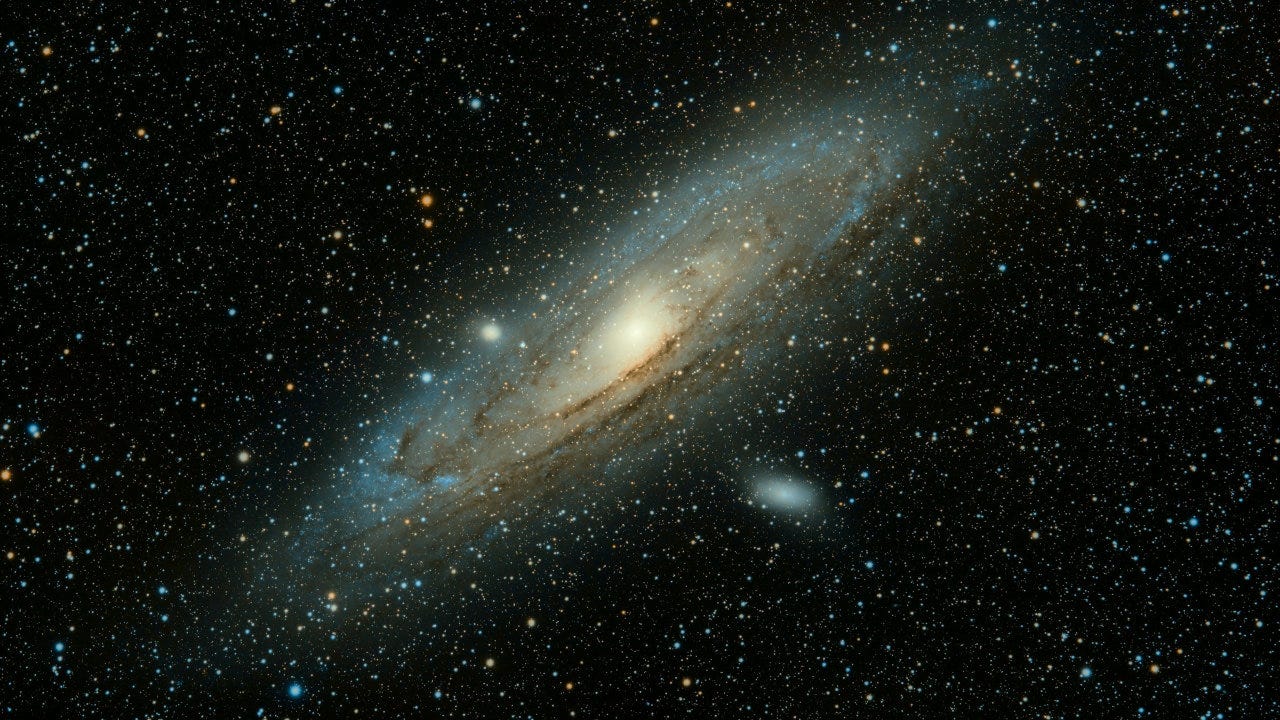
The ancient Stoic dictum to “live in accordance with nature” is worth considering, but confusing. They weren’t suggesting we appreciate sunsets, gather berries and tubers in the forests, or avoid pollution. They believed a universal intelligence ran through existence (the Logos), and that we should learn to see it and align ourselves with it. It’s in the rocks and the soil and arms of spiral galaxies. It’s in the ants who farm, the beavers who build wetlands, and those ingenious cyanobacteria utilizing water as fuel via oxidation. Human intelligence, they thought, was different in degree and application rather than kind. Squint hard enough and you could see the underlying intelligence and order.
I was at a friend’s house recently, and both his dogs were vying to sit next to me on the couch. The bigger one got there first and wouldn’t budge, so the smaller one ran to the window and barked. Odd, I thought, there’s nothing out there. The big dog bolted to the window to see what was going on, and the small dog raced back and claimed the spot next to me.
Clever boy, I thought. It displayed an understanding of theory of mind and subterfuge we’d expect out of a 7-year-old child. It used the same intelligence that allows beavers and ants and the bacteria to adapt and overcome, but they can’t see what the later consequences of their actions will be. And indeed, when the big dog came back it gave the small dog a nip and drove it from the couch. Apparently, the clever boy wasn’t clever enough.
There are reasonable qualms with the Stoic conflation of nature with reason/intelligence/order that I won’t rehash here. But I’ve long thought we’d be fools to throw it out completely. I think they were right to view existence as more of an interconnected web of intelligence based on underlying principles rather than an inanimate, mechanical clock.
Several years ago I did some public thinking about how the old theory might be adapted based on current scientific understanding, since it’s so useful for inferring values and a code of ethics.

The gist is that scientific evidence suggests an anti-entropic orientation might replace or explicate “live according to nature”. Anti-entropism is creating, preserving, and expanding order, complexity, and harmony, rather than letting systems decay into chaos, simplicity, or emptiness, as they’re inclined to do.
Stoic virtue aligns well with this dictum, and tends to counteract entropy. But let’s go deeper, particularly as it relates to the natural world and right action.
Consider Socrates upbraiding the immoral sophist Callicles with the strangest language: “(You) have failed to observe the great power of geometrical equality…you think one must practice taking more; for you have no care for geometry1.”
Balance, ratio, order, in other words, are what’s missing from Callicles’s unlimited desire for wealth, power, and prestige. Like the small dog that tricked the big one but got bitten in the end, or deer without predators stripping the land bare and causing famine, Callicles doesn’t understand that he’s harming himself and the support structures that hold his world together. Indeed, people following Callicles-like figures destroyed Athens’ democracy and prosperity a few years later.
Vice is both a failure of foresight and an entropic engine. But human capacity for conscious self-restraint via foresight and virtue is itself a product of nature. We are nature developing a prefrontal cortex, giving us the opportunity to echo something deeper about nature itself. A dog can’t ask “and then what x 3,” but we can.
Balance Like Vitruvius
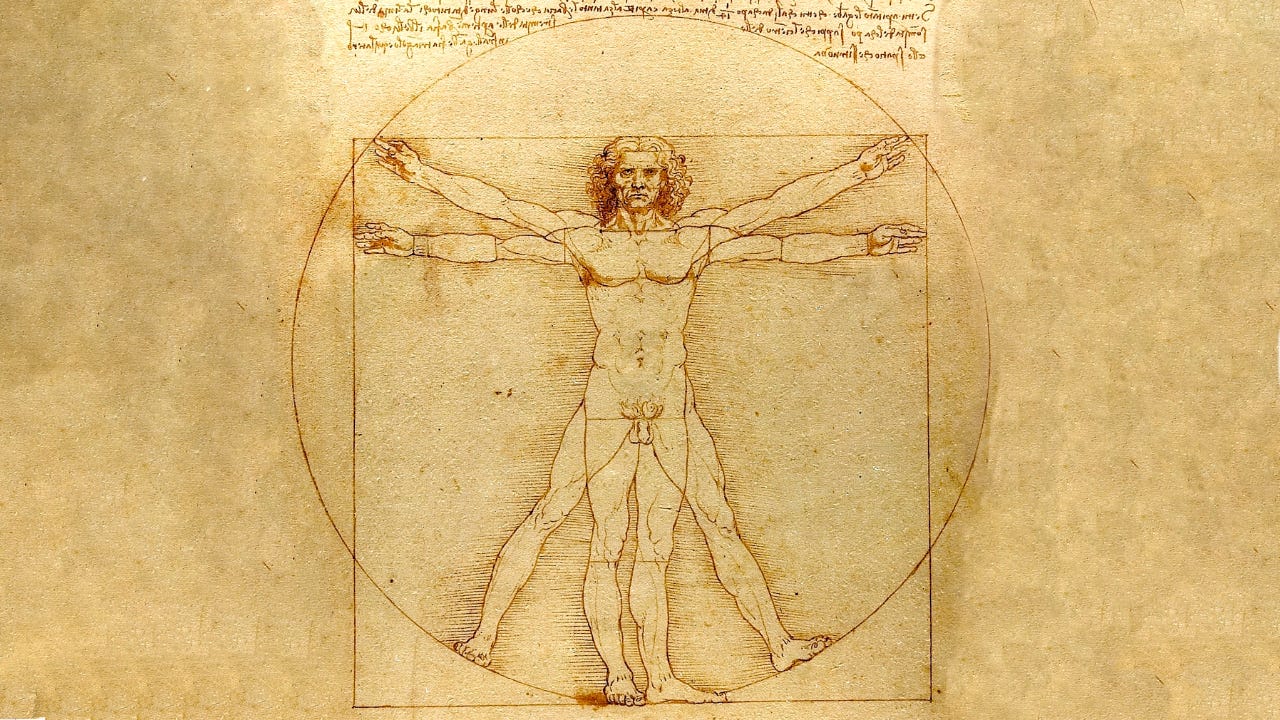
At the top of this article is the world-famous “Vitruvian Man,” Da Vinci’s depiction of a balanced human, circumscribed by a perfect circle and square. But most people don’t know that Vitruvian comes from the 1st century B.C. Roman architect-engineer-soldier-theorist Marcus Vitruvius Pollio.
Not long after his De Architectura was rediscovered in a Swiss abbey in 1414, it set the Renaissance world afire. Artists like Da Vinci used Vitruvius’s ideas about echoing the ratios found in humanity and nature to create great works. Architects designed the Renaissance’s beautiful buildings with Vitruvius’s dictums in mind.
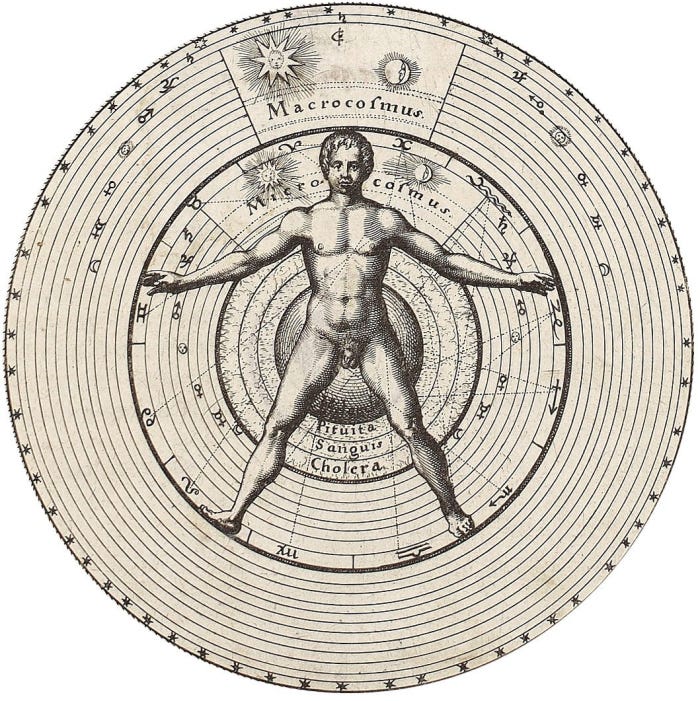
“They gathered these perfect proportions from the members of the body, and they found that this same perfection is accomplished in the conformation of the universe.”
— Vitruvius, De Architectura
Vitruvius thought we’re delighted by well-proportioned things due to their underlying harmony and the ratio of the part to the whole. It speaks to a deeper order. The very best buildings, and by extension the very best actions/goals, have a harmony of strength, utility and beauty — firmitas, utilitas, venustas. Their fruit speaks to us; delight is their integrity test.
Vitruvius emphasizes this particular progression for a reason — utility requires sturdy strength, and beauty won’t be recognized without utility’s proportional symmetry and organization. All three are required to achieve a common purpose and build something that lasts.
But these design principles were discarded for our zeitgeist: efficiency. In our world, pragmatism rules all, but at considerable cost. Much of what we ascribe to human unnaturalness is actually a failure to act in accord with harmony and balance — to act anti-entropically.
Who Needs Ratios?
“…the same numbers by means of which the agreement of sounds affect our ears with delight are the very same which please our eyes and our minds.”
— Leon Battista Alberti, De Re Aedificatoria
It’s not coincidental that the Fibonacci sequence, the golden ratio, fractals, power laws, and similar patterns show up everywhere in nature — in nautilus shells, spiral galaxies, leaf patterns, coastlines, market price distributions, Mozart’s piano sonatas, and neural firing patterns. The patterns emerge independently and at different scales because whatever utilizes them is more likely to succeed. They’re optimal solutions to recurring problems, vetted by countless millennia of testing.
Leaves arranged in the Fibonacci pattern maximize sun exposure with minimal overlap, making plants more likely to survive. The golden ratio uses less material to maximize reach. Catenary arches mirror gravity’s pull on a chain in inverted stone, achieving almost pure compression and distributing weight into the ground.
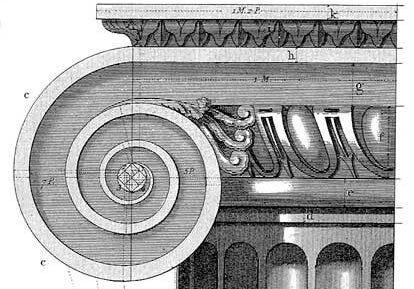
These patterns recur because they work; it’s survivorship bias at its finest. Nature keeps rediscovering an answer to questions like “how do you survive long enough to reproduce,” “how do you grow efficiently,” “how do you endure stressors,” and these ratios are the answers.
Vitruvius’s insistence on harmony wasn’t just an aesthetic judgement or arbitrary preference — he understood that beautiful buildings feel right because they echo optimal structural relationships. Da Vinci’s Vitruvian Man, couched within its circle and square, is a claim that the human body instantiates deep mathematical order.
So if we ask, “how can we create, preserve, and expand order, complexity, and harmony in this situation?”, pairing virtue, Vitruvius, and these battle-tested patterns will take us very far.
On the other hand, discarding them without very good reasons is like rifling through history’s bone yards and basing a business, building, or civilization on species that weren’t resilient enough to survive.
Naturalistic Fallacy Much?
Many of you are probably thinking: isn’t this just the naturalistic fallacy dressed up with theory?
But I’m not saying that whatever nature does is “good” and should be adopted. That would lead us to destruction and dissipation. Cancers, viruses, and animals stripping an ecosystem bare are highly efficient, mathematically precise natural patterns that should not be encouraged. They’re patterns for weapons and entropy, not resilient order.
When systems are disrupted by these entropic patterns, nature leverages its underlying geometry and usually manages to crash the system. Homeostasis wins in the end, via famine, collapse, or extinction.
The litmus test for a pattern isn’t naturalness, but “will this help us maintain or expand complexity, resilience, and harmony?” Nature’s battle-tested patterns are much more likely to help.
Away From Pristine:
This line of thinking redefines “natural” away from the static vs dynamic trap it’s mired in. Some environmentalists erroneously conflate nature with a pristine and untouched 17th-century wilderness fairy tale that never was. They call “change I don’t like,” unnatural and try to ban it. But Earth has always been opportunistically reshaped by species like termites, coral polyps, beavers, and aboriginal tribes, and periodically desolated by ice ages and cataclysms. Change is nature’s constant.
Though “unnatural” is a meaningless word in this context, we can more closely align with nature’s order. In fact, it’s because we are of nature that we can interpret and thrive on this order.
How do we do that? First on the list is moving away from the fragility of entropic-leaning stasis. Since conditions are never static, the right action — the right building, the right production, the right repair, the right policy — inevitably shifts over time. Mindlessly returning to a historical status quo breeds fragility and encourages entropy.
Since we’re talking so much about the natural world, let’s ask — what does it look like to build order amid chaos in nature?
Firmitas: Designing for long-term antifragility and generational permanence (recharging an aquifer, taming floods, using resilient materials, and having realistic maintenance cycles.)
Utilitas: Fulfilling human needs without excluding other needs and uses, including natural ones.
Venustas: Creating macro-level harmony and structural balance between human engineering and the living world to create true beauty.
None of this is anti-tech or degrowth oriented. To do it well would require more intervention, not retreat to stasis. In a few years, when solar power and desalination are even cheaper than they are now, sending massive amounts of desalinated seawater into the arid west to make its desertifying land bloom would be a boon to all concerned, if it’s wisely done.
Living Negentropically:
Just as virtue is an objective principle that’s deployed subjectively, people will disagree about what’s negentropic. It can be deployed on the level of the family, the business, and the civilization, and all require discernment that’s often lacking.
How can we identify entropic acts to avoid? Things analogous to parasites and cancers are big contenders — the appearance of great success that inevitably destabilizes. In finance, pyramid schemes fit the bill. They seem to produce massive returns, but it’s an illusion that can’t be sustained without new victims. They inevitably collapse into chaos.
The historian Tacitus described Rome’s methods as, “they made a desert and called it peace.” It’s a chilling description. But in that desert they planted something complex and new, and their civilization endured 2,200 years and produced great works of art, technology, and long stretches of peace (the Pax Romana). Genocide is immoral, but we know that while it can never be redeemed, it can be the basis of a negentropic act.
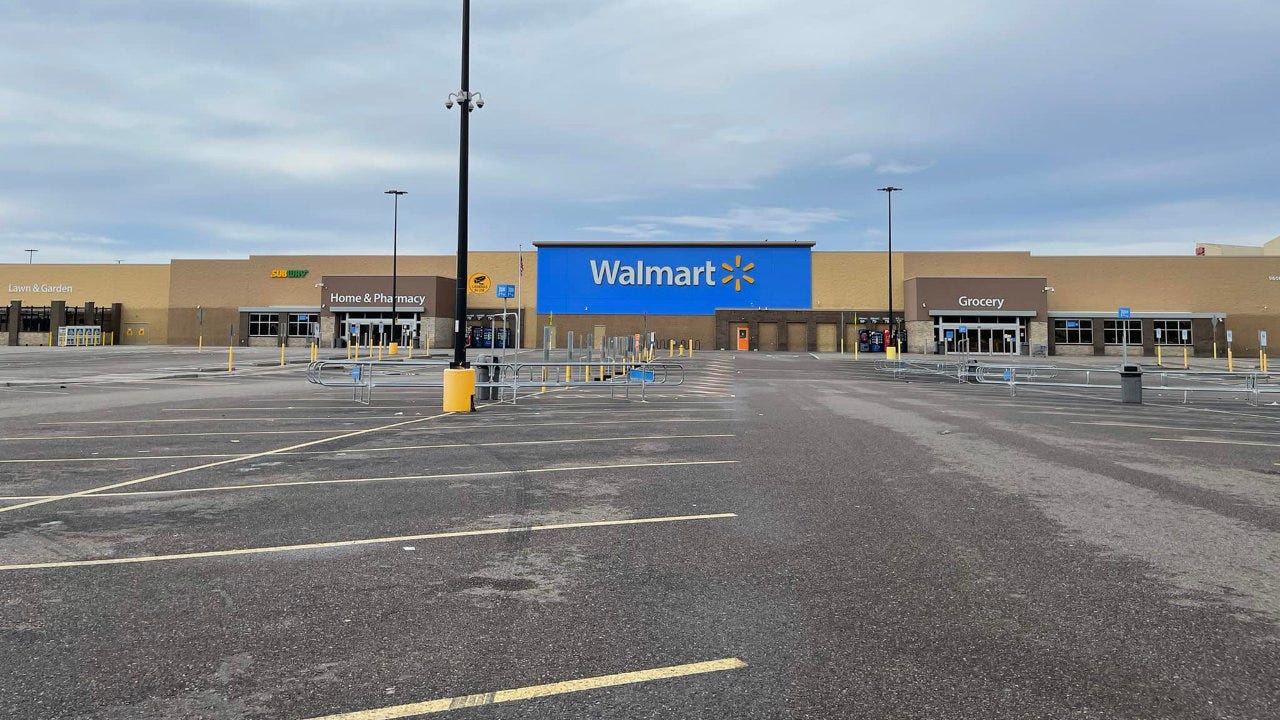
Today, human civilization is filled with entropic wastelands of our own making, literal and metaphorical. They’re awaiting something new. To take a forest teeming with life and replace it not with habitats, cultural engines, or resource production, but an asphalt parking lot, strikes me as the ultimate “make a desert and call it utility” move. While the radioactive Chornobyl zone teems with complex life, and mushrooms can feast on oil-polluted soil, a well-maintained parking lot is a barren void.
What’s An Anti-Entropic Action?
Anti-Entropy doesn’t mean abandoning “the wild” because “humans can only destroy.” It’s also not building sleek futuristic cities without nature as part of them. Humans have often been foolish in our interactions with the natural world, forgetting about 2nd and 3rd order effects, but it’s clear that human intelligence and actions can help nature work better than when it’s left to its own devices.
Take the swale — a simple ditch and berm built on contour with the land
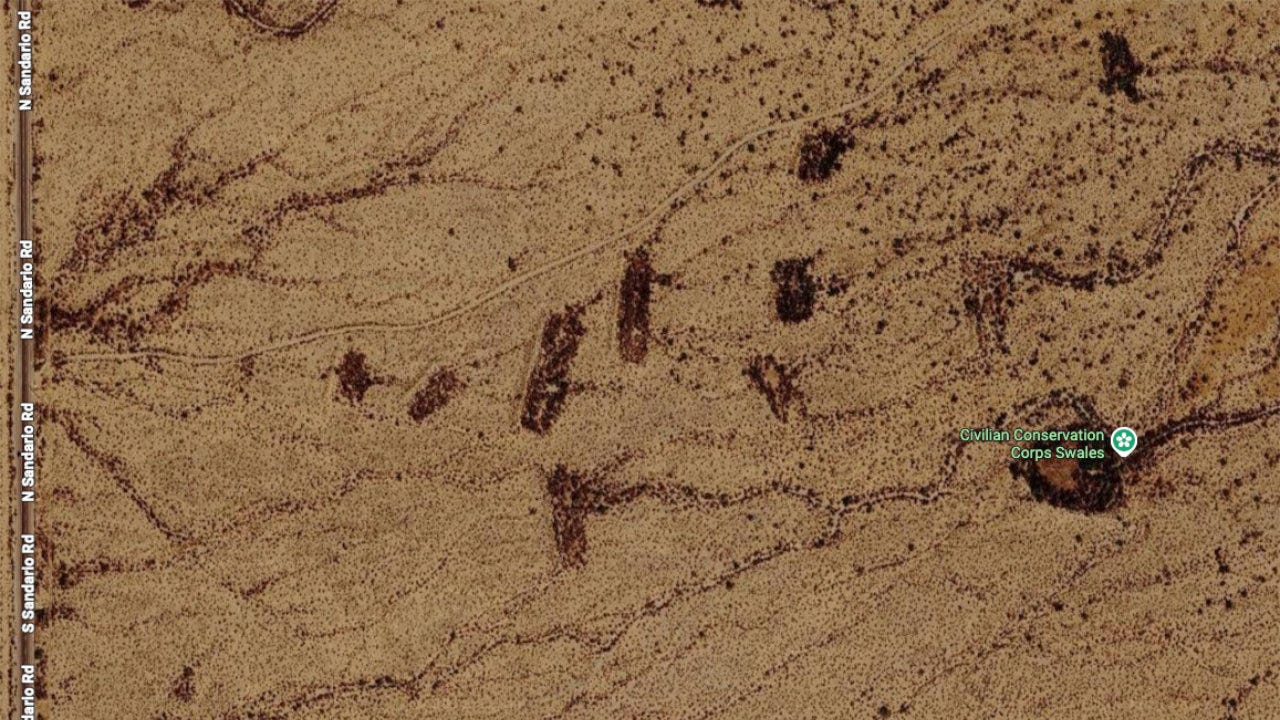
The Civilian Conservation Corps built some 8-10 foot swales outside Tucson, Arizona during the 1930s Dust Bowl. Their goal was stopping the onslaught of wind-blown sand from overwhelming a nearby road and keeping the infrequent rain from eroding the earth underneath. They were abandoned after completion.
The swales stop rainfall and let it sink into the ground instead of running off, evaporating, or causing erosion. Over decades, the aquifers recharged. Trees, shrubs, and grasses sprang up, though the surrounding land remained barren. Now, each is a tiny island of negentropy among the sea of emptiness, their trees and greenery visible from space by satellites. The horseshoe-shaped swale at the back, which gets more runoff during rains from a dry streambed, is particularly lush.
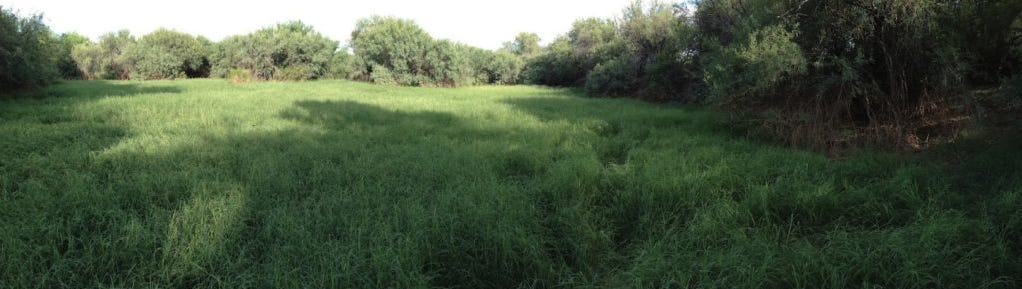
The CCC swales are also a lesson in what negentropy takes. After decades, they’re starting to erode, but have succeeded so well that the swales are buried in rich silt. This leaves them fertile, but less effective at trapping water. Even so, most will function beautifully as a passive, self-sustaining network for recharging the local aquifer for another half century before they fade away completely. If we want to do better, we actually need to maintain what we start. That’s what negentropy looks like.
Some environmentalists would be horrified to hear this call to “disturb” vast drylands areas by digging half moons by hand or bringing in bulldozers for large on-contour swales.
Many will say that deserts are plenty complex already and don’t need more life. I’m not convinced, but I don’t have to be. Earth’s land went from 37.5% drylands in 1961 to 40.6% in 2020 — an expansion of 4.3 million square kilometers. The trend continues. And given historical descriptions, we know that huge areas of North Africa were farmable in antiquity that are now barren. Some of this is our doing, and some of it is not, but it’s clearly entropic, and we should reverse it.
Human intervention isn’t infallibly good, of course. The same intelligence that designed the swale drained the Aral Sea and left it a toxic desert. The difference is whether we're building toward increased complexity and resilience or strip-mining what was there before.
We may never be able to improve on the complexity, productivity, and resilience of a rainforest, so we should probably leave most of them alone.
The Real Vitruvian Man
Callicles thought the strong take from the weak. But the strongest things nature has built — living ecosystems, thriving cities, lasting civilizations — weren’t built by taking. They were built by understanding harmony, by fitting the part to the whole, and by adding anti-fragile complexity where there was only emptiness.
In this part of the galaxy, we’re nature’s prefrontal cortex. The question was never whether we’d slip free from homeostasis and change the world, but if we’d be clever enough to use insight to change it for the better. Individually, on scales large and small, I think we can.
I stated this in a firm way, but I’m skeptical of all my positions. Like virtue, negentropic orientation is merely what has survived so far without demonstrating downsides. If you’d like to push back, please do so in the comments.
Plato. “Gorgias,” 508a
Great leapfrog into the application of natural balance. Two thoughts.
1. Humans are apex on Earth right now but we are watching a function of behavioral natural selection happening before our eyes: First World Nations are pending a population collapse. Nature is trimming the 'herd'.
2. I live in Tucson and am very familiar with those exact swales. In fact, there are thousands more (also called Tanks) across the region. In fact, I've built 4 smaller ones on my own property with dozens of rock check-dams in the washes. There's a great book on Dryland Water Harvesting by Brad Lancaster you can find on Amazon: https://amzn.to/4ukjf8t
**The Universe Does Not Care**
Andrew,
I agree with your central argument that humans are not unnatural. The accusation has always struck me as incoherent. Humans emerged from the same evolutionary processes as beavers, ants, cyanobacteria, and oak trees. Whatever humans do, however destructive or creative, is as natural as anything else in the universe.
But I think your essay takes one step too far.
You correctly dismantle the idea that nature provides a pristine state against which human behaviour can be judged. Yet having removed one source of meaning, you immediately replace it with another. "Anti-entropy" becomes the new moral compass. Complexity, harmony, resilience, and order become the things toward which we ought to strive.
My question is simple: why?
The universe does not appear to care whether a system becomes more complex or less complex. It does not care whether a rainforest flourishes or burns, whether a civilization rises or collapses, whether a species survives or disappears. The same laws that permit life also permit extinction. The same cosmos that produced Mozart produced supernovae. Nature offers no verdict.
As an absurdist, I see no evidence that the universe wants anything at all.
This is where I part company with both environmental romantics and modern Stoics. The environmental romantic looks at nature and sees innocence. The Stoic looks at nature and sees reason. I look at nature and see indifference.
That is not a criticism of nature. It is simply an observation.
The problem with deriving ethics from entropy, harmony, geometry, or complexity is that they remain descriptions of what is, not prescriptions of what ought to be. A cancer is natural. A parasite is natural. A famine is natural. A rainforest is natural. A galaxy is natural. None of these phenomena contain moral instructions.
To say that we should promote complexity because complexity has survived is merely to note that some forms persisted longer than others. Survival is a fact. Meaning is something else entirely.
Where I think humans are unique is not that we are nature's prefrontal cortex. It is that we are perhaps the only creatures capable of recognising the silence of the universe and acting anyway.
We build schools not because the cosmos demands education.
We love our children not because evolution commands it.
We create art not because geometry requires it.
We choose these things.
The absurd condition is that there is no ultimate justification beyond the choice itself.
Ironically, I think this places a greater responsibility on us, not a lesser one. If the universe contains no objective purpose, then every purpose is our responsibility. We cannot outsource morality to nature, entropy, God, evolution, or mathematics. We must decide.
That is why I find the modern discussion around humanity's relationship with nature so fascinating. The question is not whether humans are natural. We obviously are. The question is what kind of world we wish to create now that we possess the power to reshape both landscapes and minds.
Nature will not answer that question for us.
The universe will remain silent.
The answer, if there is one, must come from us.